


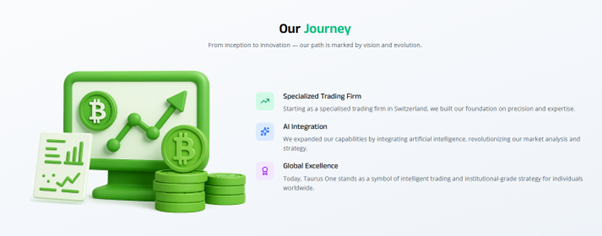
The first thing that stands out about Taurus One is not what it promises, but what it avoids promising.
There are no declarations of overnight gains or breathless countdowns to market opportunities. Instead, the platform presents trading as something quieter and slower—more procedural than thrilling. It leans heavily on discipline, routine, and structured oversight. In an industry that often sells speed, that restraint feels deliberate.
The account architecture reflects this philosophy. Users move from Bronze tiers upward, but access expands gradually. Signals increase. Strategic sessions become more frequent. Manager access widens. It feels less like leveling up in a game and more like being handed responsibility in measured increments. Early tiers limit complexity, almost as if to prevent enthusiasm from outrunning experience.
I’ve watched enough trading platforms evolve over the years to recognize when feature overload becomes its own form of marketing. Here, the unfolding appears intentional. The structure paces behavior.
Automation is another revealing detail. It’s present, but framed cautiously. Rather than positioning algorithms as aggressive profit-seeking engines, Taurus One describes them as rule-bound systems operating within defined parameters. The messaging emphasizes emotional control—reducing impulsive decisions, maintaining consistency. Automation, in this context, isn’t about replacing judgment. It’s about reinforcing discipline.
Transparency is treated less as a slogan and more as infrastructure. Each tier spells out signal counts, support scope, and educational depth. Reporting structures are described as visible and shared, not hidden behind technical fog. That clarity matters. When traders understand what they’re getting—and what they’re not—it tempers unrealistic expectations.
One user described noticing that signals included context rather than just entry points. That small distinction stayed with me. Context suggests explanation. Explanation suggests accountability.
The Academy component reinforces the same tone. Foundational lessons introduce terminology and routine-building. Advanced modules move into volatility management and analytical alignment. Education here isn’t a side offering bolted onto a trading terminal; it mirrors the platform’s broader emphasis on progression. Knowledge expands alongside capital exposure.
I found myself pausing at the insistence on routine, quietly wondering how many traders underestimate the power of repetition in markets that reward patience more often than bravado.

Analytics sit at the center of the decision-making narrative. AI-supported monitoring and structured evaluation routines are woven into the ecosystem. The emphasis isn’t on predicting dramatic swings but on operating within defined analytical frameworks. It’s a subtle but important distinction. Stability, not intensity, is the recurring theme.
That theme carries into how performance itself is framed. Growth is described as cumulative. Feature expansion is incremental. Strategic consultation increases methodically at higher tiers. Nothing in the presentation suggests acceleration for its own sake. The tone is steady, almost restrained.
There’s a behavioral logic embedded in the design. By limiting early access and tying expanded tools to progression, the system nudges users toward measured development. Impulse is quietly discouraged. Escalation must be earned through structure.
Several users speak about improved routine discipline. One mentions following a defined daily process instead of jumping between strategies. Another highlights reporting visibility—being able to monitor how strategies are applied. These aren’t dramatic testimonials. They’re practical observations. And that practicality feels consistent with the platform’s broader message.
Trust, in financial systems, often develops through predictability. When education, analytics, and reporting all reinforce the same structured framework, coherence builds. There are no sudden tonal shifts between marketing and mechanics. The messaging aligns with the architecture.
What’s interesting is how the absence of hype becomes part of the identity. The platform doesn’t attempt to mimic high-volatility trading arenas or gamified dashboards. It presents trading as managed exposure, shaped by oversight and gradual scaling. That framing inevitably influences user psychology. When growth is described as steady and layered, traders may evaluate their own performance through that lens.
It is not an environment built for adrenaline.

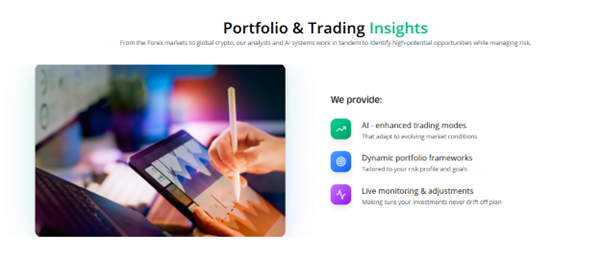
Instead, Taurus One appears constructed for traders who value clarity over spectacle. The ecosystem suggests that long-term performance is less about seizing every movement and more about building habits that endure market cycles. Education connects directly to execution. Oversight aligns with analytics. Tier progression mirrors experience.
The result is a platform that feels less like a sprint track and more like a structured training program. Whether that discipline translates into sustained performance depends, as always, on the individual behind the screen. But the framework itself leaves little doubt about its priorities: order, visibility, and measured growth over noise and haste.