
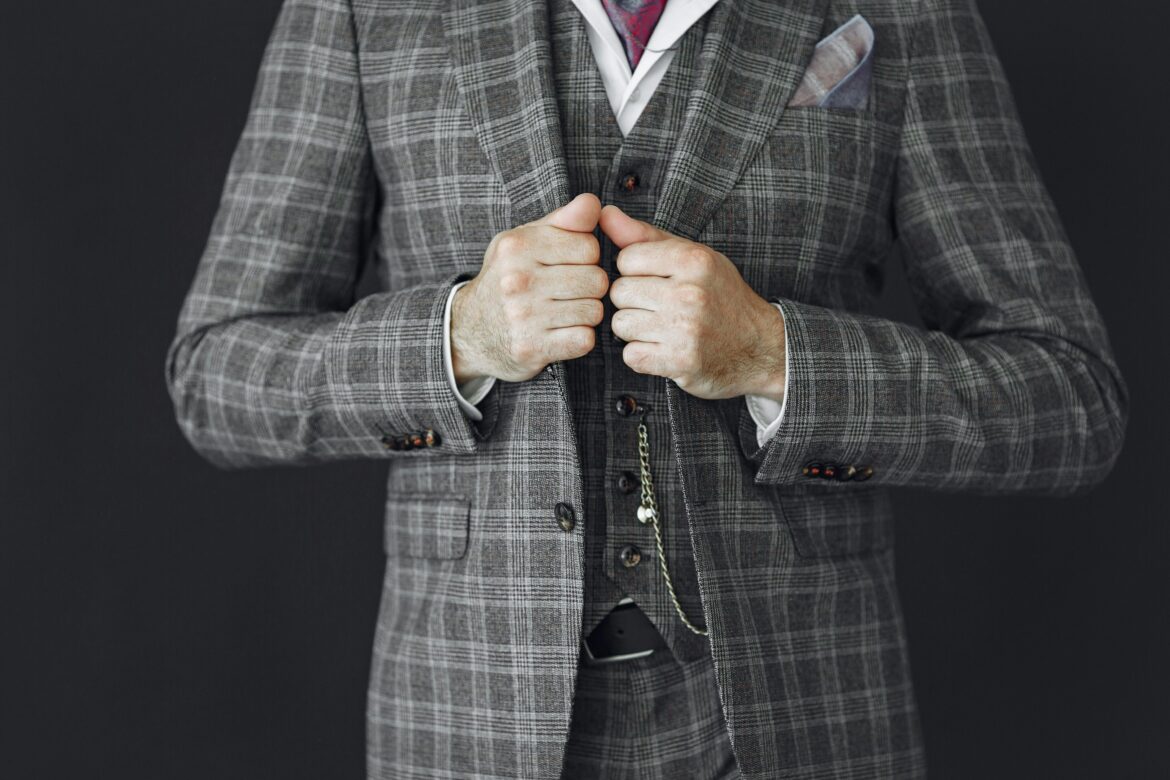
A check suit is one of those purchases that either works brilliantly or sits in the wardrobe gathering dust. Get it right, though, and a check suit becomes the most versatile thing you own — smarter than casual, more interesting than plain, and surprisingly adaptable across different occasions.
So where do you start?
Understanding the Pattern
The weave itself is deceptively simple: intersecting lines forming grids or squares. But the scale and contrast of those lines change everything. Prince of Wales, windowpane, tartan, micro-check — each reads differently depending on how bold the pattern is and how much contrast sits between the tones.
Mid-scale patterns in neutral tones are the sweet spot for most people. Enough visual interest to stand out; not so much that it overwhelms everything else you’re wearing.
Colour First
This is where most decisions actually get made.
Navy is the safest and most flexible base. Pair it with a light grey or soft blue check and it works across formal events, weddings, even business settings — reading smart in photographs without trying too hard. White shirts, darker ties, done.
Grey offers something slightly softer. Lighter greys suit daytime events (summer weddings, race days), while charcoal leans more formal — better suited to evenings or occasions that call for something a bit heavier.
Lighter blue tones bring a more relaxed feel entirely. These land well in spring and summer, especially alongside brown shoes and lighter accessories. The colour palette just breathes more.
Then there are the bolder options. Burgundy overchecks, larger windowpane patterns, high-contrast grids — these are statement choices. Brilliant for social events where standing out is the point. Less appropriate anywhere traditional or formal.
Two-Piece or Three-Piece?
A two-piece check suit is the more flexible option day-to-day. Wear it as a full set when the occasion calls for it, or split the blazer and trousers up for something more relaxed. It works both ways.
Three-piece adds structure. The waistcoat ties the outfit together — particularly useful for weddings or any occasion where the jacket might come off later in the evening. It also photographs exceptionally well, which is why grooms keep choosing it.
Here’s the thing: if you’re unsure which to go for, the three-piece gives you more options, not fewer. Full set for the main event; jacket and trousers separately for everything after.
When Does It Actually Work?
More often than you’d expect. But the pattern and colour have to match the setting.
Weddings are a natural fit — especially in navy or grey, three-piece styles are common for both grooms and guests. Race days and social events are where checks arguably shine most; slightly bolder patterns and lighter tones are widely accepted, sometimes expected. Business environments work well too, provided the check is subtle and the base colour stays dark. And for prom or formal events, a clean slim-fit check lets younger wearers stand out without looking like they’re trying too hard.
Styling It Properly
Keep everything else simple. A plain shirt lets the pattern do its job without creating a visual fight. For ties, either match the base colour of the check suit or pick out one of the secondary tones woven into the pattern.
Shoes: black for formal, brown for daytime or casual settings. Accessories should be minimal — the more prominent the pattern, the less you need around it.
Why It’s Worth Considering
Most people looking beyond a plain suit end up considering checks at some point. The reason is straightforward: they offer variety without sacrificing structure. They work across age groups, suit most body types, and can be dressed up or down in a way that plain suits simply can’t.
For anyone building a wardrobe meant to cover more than one type of occasion — a check suit, well-fitted and in the right colour, is rarely a bad addition.