
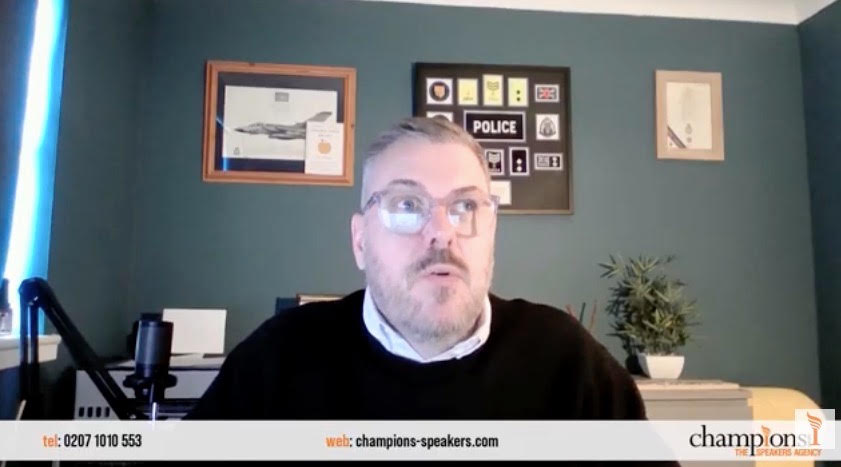
A former police officer has warned that “unacceptable” levels of officers are taking their own lives because of a lack of support.
The alert has been issued by Ryan MacDonald, a former police officer and bestselling author and leading speaker who specialises in leadership, resilience and mental health.
Ryan, who is now a leading mental health speaker explained his concerns in a new video on the YouTube channel of Champions Speakers agency.
In it he outlines the mental health challenges and cultural barriers faced by frontline emergency service workers.
Ryan said: "Suicides and police, in particular, are climbing. They’re climbing in the UK. We’re getting to the stage that officers are dying by suicide every other month and that’s just not acceptable.
"We’re putting these young men and women in positions of authority with decision-making powers, arrest powers, but that support isn’t really around it. So my talks are really aiming to say it’s not just the police. I just want people to walk away going, ‘You know what? I can ask for help’.
"Probably the thing that most people never see or understand is behind closed doors. Everybody will see the dramatic police interceptors or chases on TV, or even for the programmes of the ambulance service, heading for people’s houses. But what they don’t actually see is the bits behind the closed doors.
"So the sudden deaths, the suicides, the family that you’ve got to pass the death message to, and then even after that, as a leader, for me, the other parts are making sure that the staff are okay, making sure that the support is around them.
"Cops are so busy now; they’re going from call to call to call every shift. It’s just relentless: call after call after call. There’s just no stopping. So trying to get that time in between to make sure that that support there is really challenging, so that’s probably the biggest bit that no one ever sees."
Ryan is now using his platform to warn organisations that it is essential they encourage staff to discuss their mental health more to prevent deaths through suicide.
Ryan also says that, despite the grim realities, officers are often just expected to get on with the job: "I’m not going to say everyone needs to get support, but there’s been some stats done, and the numbers where the average person sees maybe two to three traumatic incidents in their lifetime, the average police officer would see 300 to 400 in their career.
"Sometimes they get compartmentalised about it. Sometimes officers are saying this is just part of the job, and dealing with trauma is part of the job. But being able to deal with it in the right way, you have to acknowledge it first. And unfortunately, sometimes the police culture doesn’t allow it, you know – the bravado."
Ryan said there is a need within the police and other emergency services to tackle the culture of bravado and get help to those who need it: "We definitely need to change that culture to help that trauma management in the blue light services.
"One of the themes I get in my talks is I get a lot of approaches afterwards, sometimes on the day, sometimes afterwards with messages, and they generally follow the theme of ‘Thank God it’s not just me’.
"I want people to think that they’re not alone. That the uniform isn’t a barrier, and senior roles aren’t barriers to speaking about your mental health, just because you have authority to make decisions, whether it’s in the oil and gas sector, whether it’s in the civil service, doesn’t matter where it is.
"Just because you are in a position of authority, it doesn’t mean to say you can’t suffer with your mental health, and it doesn’t mean to say you can’t and shouldn’t talk to people about it."