
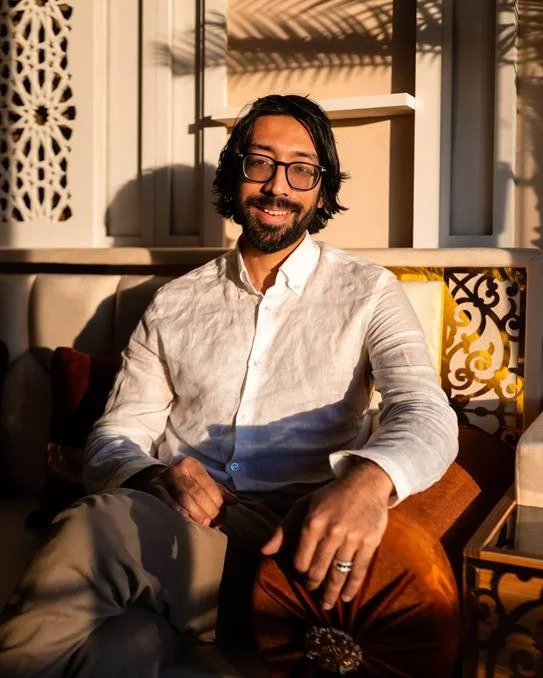
Some clothes change how a woman carries herself. Not through bold design or theatrical details — just the way a piece moves when she walks into a room. The strongest garments belong to women who don’t need to announce themselves. Their presence is simply felt. That quiet idea sits at the heart of what Sajjad Choudhury is building at Selhaya.
Before fashion, Sajjad spent years inside global technology environments — fast-moving, competitive, unforgiving. That world taught him something he’s carried into every business decision since: the brands that last are the ones that know exactly who they’re creating for. Not a demographic. A woman.
Who She Is
The Selhaya woman isn’t defined by what’s trending. She’s defined by presence.
She wants clothing that feels refined without excess. At a gallery opening, a charity gala, a heritage race like Ascot — her style reads as calm, assured. Nothing overdone. Details are there, but they don’t shout. She’d never want them to.
Silk does a lot of the work here. Its movement is natural; its softness communicates something without trying. When people imagine the Selhaya woman, that drape usually comes to mind first — the way silk flows and gives the wearer a quiet kind of confidence that heavier fabrics simply can’t replicate.
Embroidery features too, but sparingly. It adds character, not noise. The craftsmanship is thoughtful because the woman wearing it would notice if it wasn’t.
She moves through spaces where culture and creativity matter — museum exhibitions, international gatherings, intimate dinners where conversation runs late. In these environments, personal style is a form of expression, not performance. Her clothes say something about who she is. They don’t say everything.
The Patience Behind the Process
Sajjad’s approach to building Selhaya borrows directly from what he observed — and sometimes witnessed go wrong — during his tech career.
“Very early on, I learned that change is not optional if a business wants to stay relevant,” he says. “I saw first-hand what happens when organisations become comfortable doing what already works — they get left behind.”
That lesson cuts both ways. In fashion, chasing change for its own sake is just as damaging. Selhaya doesn’t release collections to fill a seasonal calendar. The process is slower, more deliberate — fabric selection, hand embroidery, garment construction all treated with real care.
Travel and cultural exposure shape the designs too. The founders have spent time in different corners of the world, and that shows in the pieces: influences absorbed and then reinterpreted, never copied.
“Selhaya does not dictate trends or release collections for the sake of calendar cycles,” Sajjad explains. “It focuses on creating individual pieces that carry meaning, cultural relevance, and longevity.”
Honestly? That’s a harder path. It requires resisting constant pressure to move fast, stay visible, do more. Most brands can’t hold that line.
Why It Matters
Fashion moves relentlessly. New collections, new cycles, new noise. The woman drawn to Selhaya isn’t searching in that direction.
She wants something thoughtfully made. Beautifully constructed. Quietly distinctive — the kind of piece she’ll reach for years from now and still feel good wearing.
By designing specifically for her, Sajjad Choudhury is shaping Selhaya into something more intentional than most labels manage to be. The clarity of that vision — silk, craft, cultural storytelling — may well be what the house is remembered for.
The question isn’t whether there’s a market for it. There always has been. The question is whether anyone would take the time to build it properly.
Selhaya is trying to.